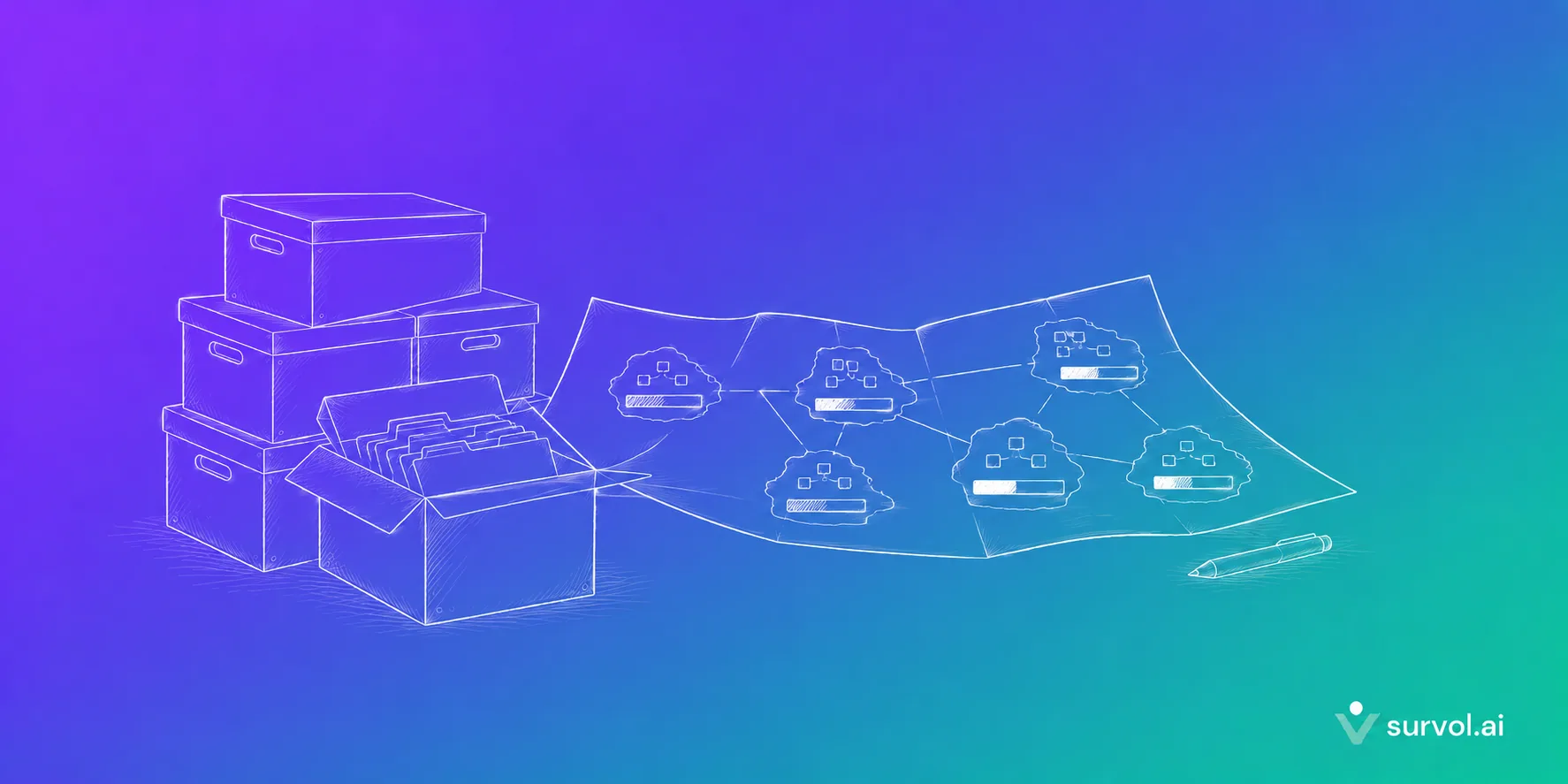
Most product-steering tools assume you are starting from a blank page. In real life you already have code, features already in production, and a history. Re-entering all of that by hand into a new tool is the kind of chore nobody ever finishes.
Hence Survol's second way in, next to creating a product from scratch: importing an existing product. You tick the relevant repositories, the agent reads them, and it hands you a proposed feature map. Not a carved-in-stone truth - a proposal to approve.
The agent imposes nothing. It clears the ground; you decide.
What the agent proposes
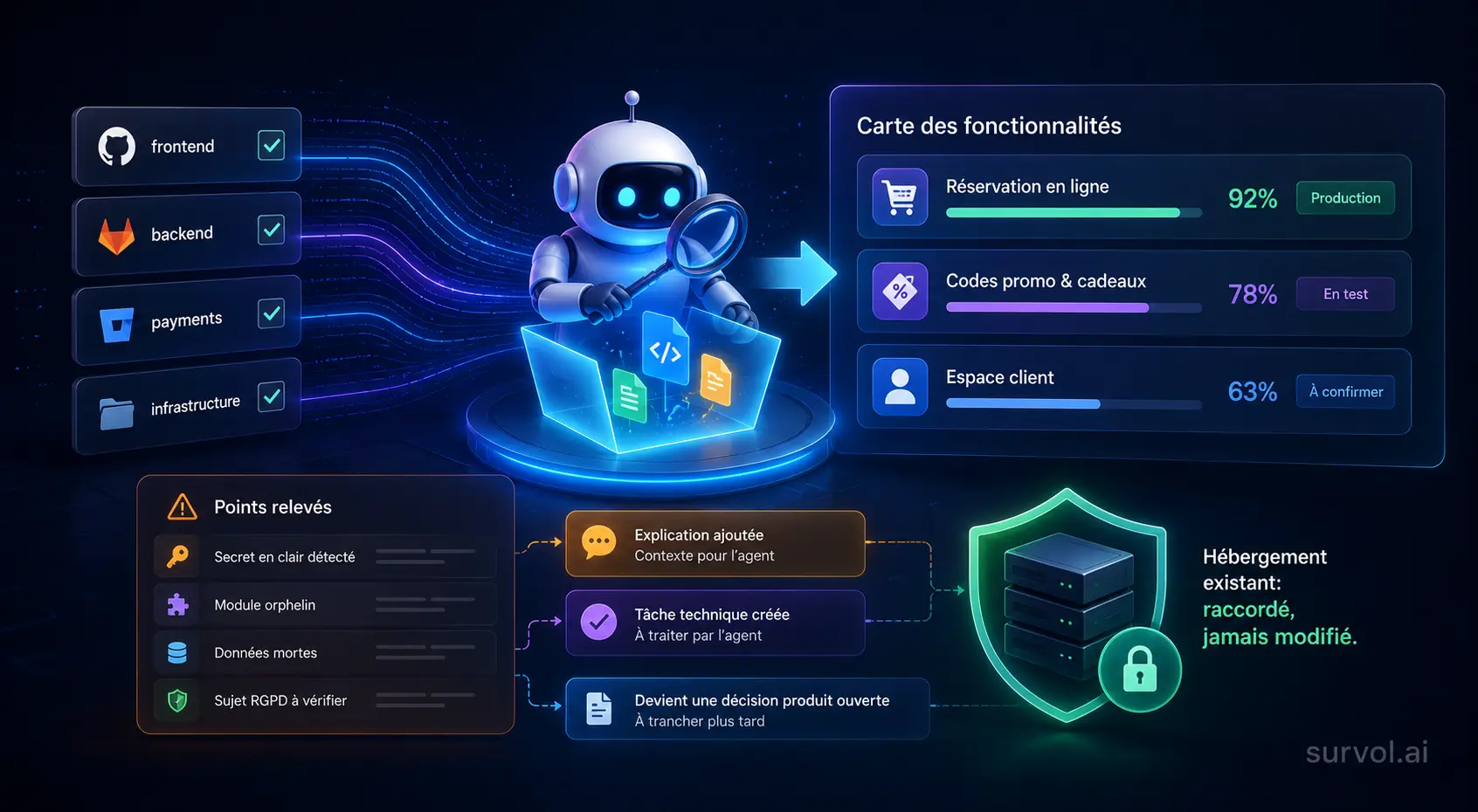
For every feature it detects you get a name, a description, a guessed lifecycle status, a confidence percentage, and the associated technical tasks. You keep control from end to end: approve, rename, merge two features that are really one, discard a false lead.
# Extract from a feature map proposed at import time
- Online booking          confidence: 92%   status: production
- Promo codes & gift cards confidence: 78%   status: in test
- Customer area           confidence: 63%   status: to confirm
Findings never block you
While reading the code, the agent also flags points worth attention - typically around architecture, dead data, plaintext secrets, orphan modules, or GDPR matters. Those findings are non-blocking. For each of them you can answer inline:
- an explanation, which becomes context for the agent;
- or a technical task, if the point deserves a fix.
And above all: anything you do not deal with straight away does not disappear. It automatically becomes an open product decision, to be settled later, alone or as a team. Nothing is lost, nothing blocks.
A non-negotiable principle: existing hosting is connected, never modified. Importing a product into Survol does not touch your infrastructure. We observe and we link; we take ownership of nothing.
In practice
- You tick the repositories to import.
- The agent analyses them and proposes a feature map with confidence levels.
- You approve, rename, merge - and the map becomes your source of truth.
- Findings you leave aside become open product decisions.
Taking back control of an existing product should not cost a week of data entry. In a few minutes you go from a pile of repositories to a living feature map - the one you have been missing, in fact, ever since the code started moving faster than the documentation.